Learning by Sharing: SFHC Exchange Visit to SCOPE Malawi
Written By: David Banda, SFHC Staff
Knowledge exchange is at the heart of strengthening agroecology. On 24th July 2026, the Soils, Food and Healthy Communities (SFHC) team visited SCOPE Malawi in Lilongwe to learn from successful farmer-led initiatives and innovative sustainable farming practices.
The visit began at Mkakambo Village, Traditional Authority Chimutu, where the team met an inspiring farmer group implementing integrated agroecological practices that are improving food security, nutrition and household incomes.
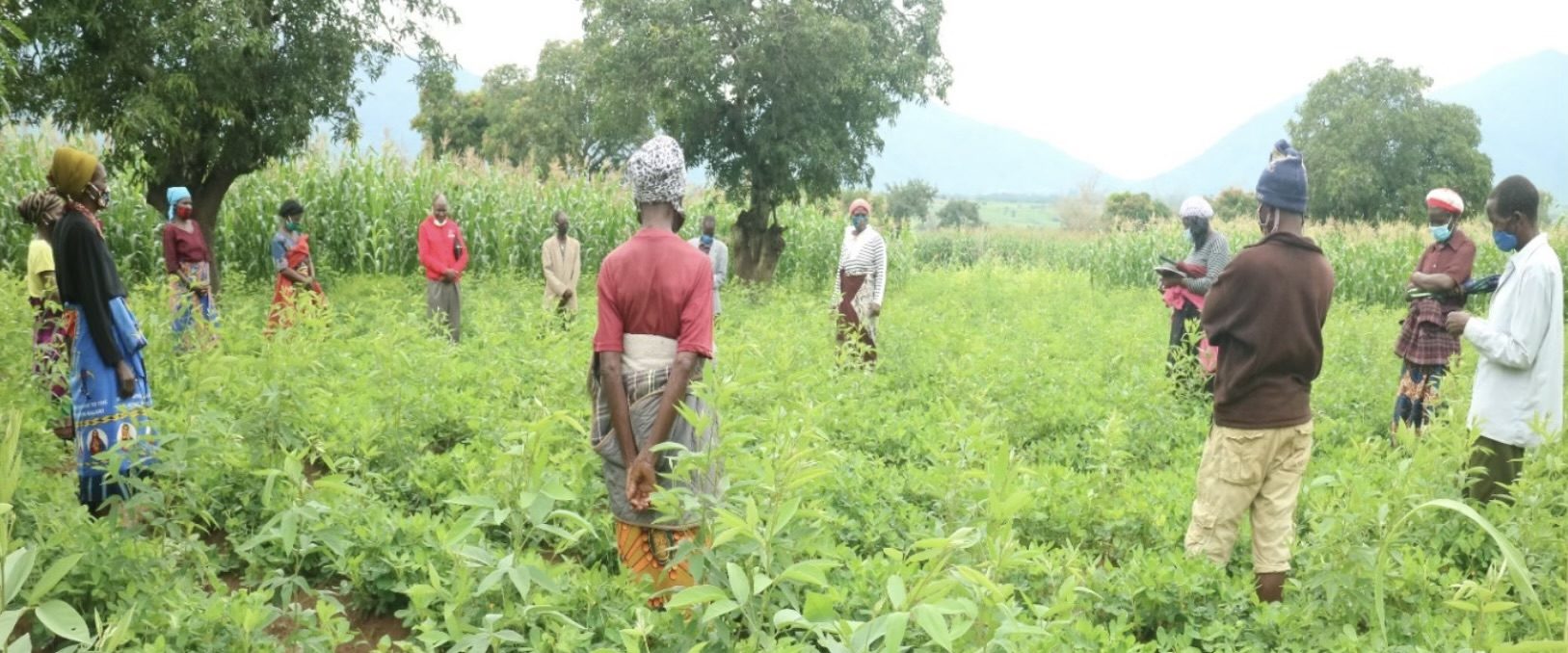
The farmers are multiplying indigenous crop seeds, helping to conserve local seed diversity while ensuring access to quality seed for their communities. They have integrated livestock production, particularly pig rearing, to produce organic manure that enriches soil fertility and supports crop production. Through income earned from ganyu (casual labor), the group has invested in purchasing livestock and acquiring land where they established a thriving permaculture demonstration garden. In addition, many members have created backyard permaculture gardens, enabling their families to produce diverse and nutritious food throughout the year.
Figure 1: Showing the farmer group established permaculture demonstration garden
The exchange continued at the SCOPE Malawi Training Centre, where participants received practical demonstrations on sustainable farming technologies. The SFHC team learned how to prepare organic manure using tobacco stems and livestock urine, showcasing how locally available materials can be transformed into valuable soil fertility inputs. The team also explored energy-efficient geysers, an innovation that reduces energy consumption while promoting environmentally friendly household practices.
Figure 2: Showing some technologies at SCOPE Malawi Training Centre and Jazzakah (SCOPE Malawi) training SFHC Team
The visit highlighted the value of farmer-to-farmer learning and collaboration in advancing agroecology. By exchanging ideas and practical experiences, both SFHC and SCOPE Malawi continue to strengthen efforts to build resilient farming communities that priotize healthy soils, improved nutrition, biodiversity conservation and sustainable livelihoods.
Key Takeaways
Indigenous seed multiplication strengthens community seed security.
Integrating livestock with crop production improves soil fertility through organic manure.
Permaculture gardens enhance household nutrition, biodiversity and climate resilience.
Locally available materials such as tobacco stems and livestock urine can be used to produce effective organic manure.
Energy-efficient technologies contribute to environmental conservation and reduce household energy costs.
As SFHC continues promoting agroecological practices in the Northern part of Malawi, exchange visits like this demonstrate that learning from one another remains one of the most effective pathways to building sustainable food systems and resilient commu
Leave a Comment
Last Updated: September 1, 2026 by Student Volunteer
Learning by Sharing: SFHC Exchange Visit to SCOPE Malawi
Written By: David Banda, SFHC Staff
Knowledge exchange is at the heart of strengthening agroecology. On 24th July 2026, the Soils, Food and Healthy Communities (SFHC) team visited SCOPE Malawi in Lilongwe to learn from successful farmer-led initiatives and innovative sustainable farming practices.
The visit began at Mkakambo Village, Traditional Authority Chimutu, where the team met an inspiring farmer group implementing integrated agroecological practices that are improving food security, nutrition and household incomes.
The farmers are multiplying indigenous crop seeds, helping to conserve local seed diversity while ensuring access to quality seed for their communities. They have integrated livestock production, particularly pig rearing, to produce organic manure that enriches soil fertility and supports crop production. Through income earned from ganyu (casual labor), the group has invested in purchasing livestock and acquiring land where they established a thriving permaculture demonstration garden. In addition, many members have created backyard permaculture gardens, enabling their families to produce diverse and nutritious food throughout the year.
Figure 1: Showing the farmer group established permaculture demonstration garden
The exchange continued at the SCOPE Malawi Training Centre, where participants received practical demonstrations on sustainable farming technologies. The SFHC team learned how to prepare organic manure using tobacco stems and livestock urine, showcasing how locally available materials can be transformed into valuable soil fertility inputs. The team also explored energy-efficient geysers, an innovation that reduces energy consumption while promoting environmentally friendly household practices.
Figure 2: Showing some technologies at SCOPE Malawi Training Centre and Jazzakah (SCOPE Malawi) training SFHC Team
The visit highlighted the value of farmer-to-farmer learning and collaboration in advancing agroecology. By exchanging ideas and practical experiences, both SFHC and SCOPE Malawi continue to strengthen efforts to build resilient farming communities that priotize healthy soils, improved nutrition, biodiversity conservation and sustainable livelihoods.
Key Takeaways
As SFHC continues promoting agroecological practices in the Northern part of Malawi, exchange visits like this demonstrate that learning from one another remains one of the most effective pathways to building sustainable food systems and resilient commu
Category: Uncategorized
Navigation