Currently, our Harness Farm Project interns Clara Levy and Wezzie Phiri (picture below) are busy with conducting market observations and consumer interviews in 4 towns and villages (Mzuzu, Ekwendeni, Enukweni and Rumphi) to understand their expectations and eating habits in the context of agroecological products.
Furthermore, during the past months, our Harness Farms project team engaged with producers across the large three working areas and collected valuable data through 990 surveys and insightful focus group discussions with around 70 farmers. The primary objective was to gain insights into their farming practices, their familiarity with agroecology, and the marketing challenges they encounter. Additionally, we sought their input on the specific data they desired to gather regarding consumers’ dietary preferences, allowing for improved production organization. Additionally, we started with project awareness meetings with the farmers as well as training on agroecological farming practices like manure preparation.
Project interns Wezzie Phiri and Clara Levy at market in Rumphi conducting consumer surveys.
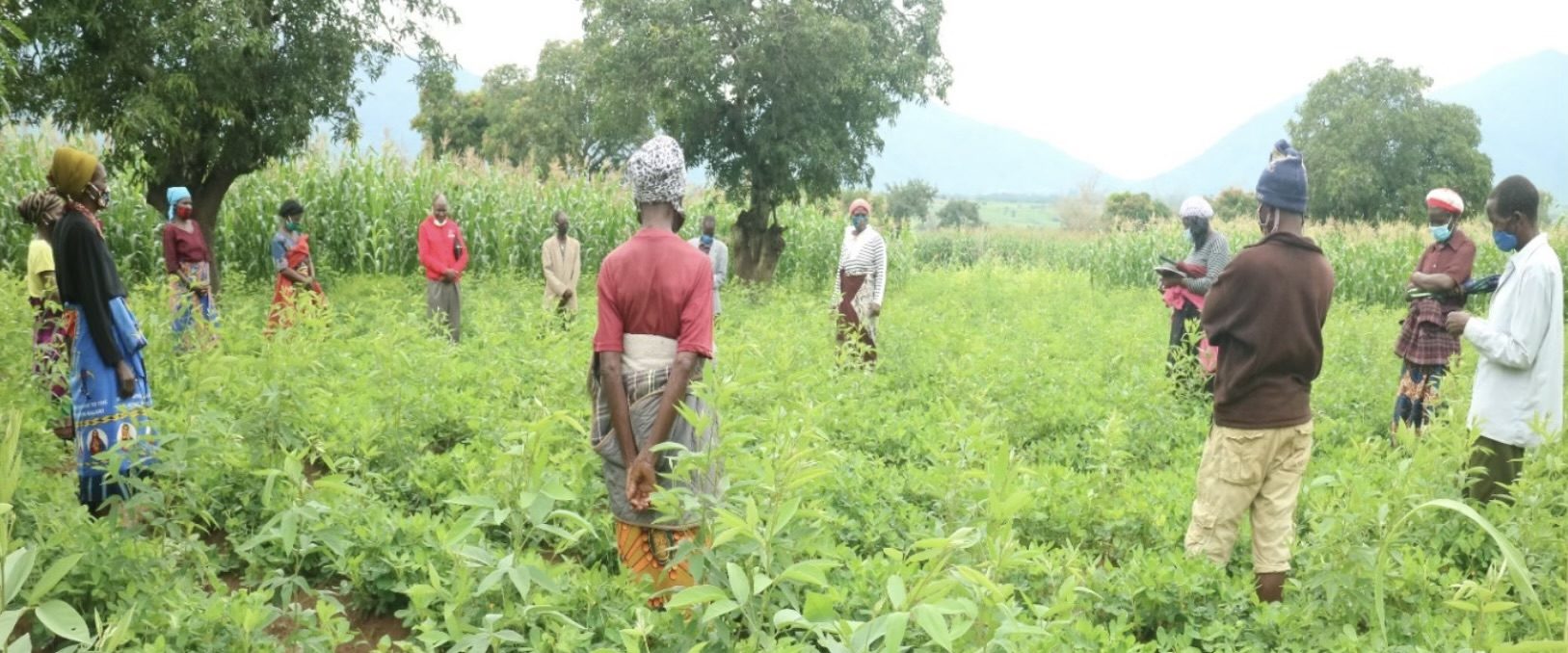
In May and June our community promoters were active across ten different working areas for a 1-day refreshment training as part of our Biovision project. The focus of these sessions was to enhance and deepen our farmers’ understanding of agroecology utilizing our comprehensive Participatory Teaching Guide. The training covered key aspects including ecological farming, nutrition and gender relations. Through this initiative, our participants had the opportunity to not only refresh their knowledge on topics such as sustainable farming practices, dietary diversity, and gender roles and decision-making within households, but also to address issues like gender-based violence. Furthermore, these sessions fostered meaningful discussions among farmers, enabling them to exchange solutions and insights regarding current challenges in the farming community.
Training with farmers in Bwaba (below) and Chisangano (top) area.
We are so excited to announce the start of SFHC’s new project: Harnessing agroecological food systems to enhance nutrition, income, market access and food security among smallholder farmers in northern Malawi (Harness Farms)! This project is funded by the Biovisions Foundation and we are so happy to share the development of this in our efforts to promote healthier, equitable, and resilient communities.
The project focuses on addressesing three primary issues:
Limited and low-priced markets for agroecological products,
Gender inequity
Low dietary diversity
We will work on the Mzimba and Rumphi Districts in northern Malawi through community education and participatory methods. You can read more about this project here. We will be sure to share any updates of the progress of the Harness Farms Project on our page.
Earlier this year, SFHC students and staff (Maia, Noah, & Verna) had the chance to join SFHC staff and community promoters on a visit to Jombo. They met with village members and had the chance to learn about the farmers and their fields, as well as hear about how SFHC has supported their farming development.
Farmers noted that they enjoy the collaborative nature within their community and the extensive support they can receive from one another. They also emphasized how SFHC has brought them farmer education, family support, and provided good and nutritious seeds to them.
On January 17th 2023, SFHC was excited to welcome a group of researchers, members of nonprofits, and farmers at the SFHC Centre for the Strengthening Agroecology Regional Networks Workshop! This workshop was aimed to foster knowledge-sharing and discussions among stakeholders from Malawi, Uganda, and Tanzania.
Attendees exchanged findings and strategies for promoting agroecology at regional levels while also developing action plans to support the necessary institutional framework on a larger scale. Presenters and keynote speakers shared their wonderful work on organic agriculture and on policy.
We are so proud of the great progress and achievements that have been made in agroecological efforts! You can find further details about this by reading the summary of this workshop and also The Daily Times news’ articlethat covered it.
We are deeply saddened by the sudden losses of Penjani Kanyimbo and Godfrey Mbizi, who both passed away on Saturday, February 4th in flash floods. Both Penjani and Godfrey were longtime employees of SFHC.
Penjani Kanyimbo was born in Chitipa, a multilingual region of Malawi near the northern borders with Tanzania and Zambia. His natural talent for languages would eventually have a great impact on our work. Penjani joined SFHC in the year 2000. Over the last 23 years, he played many roles through his multi-faceted work at the organization: from driver, to translator and interpreter, to manager of the Farmer Research & Training Centre. We will miss his kindness, his gentle humour, and his sincere, generous spirit.
Godfrey Mbizi became a member of SFHC in 2014, during the Malawi Farmer to Farmer Agroecology Project (MAFFA). He first became involved as a member of the Farmer Research Team. Over the next few years he quickly established himself as not only a talented farmer, but a strong community leader with a clear commitment to the goals of our work. He was hired as a community promoter in 2017, and as a member of staff he worked hard with our team to support farmers throughout his home region of Jombo. We will miss his deep knowledge and his dedication.
The losses of Penjani and Mbizi are profoundly felt by the staff, farmers, researchers and wider community of SFHC, as they are felt by all of us who were touched by the lives of these incredible colleagues and friends. Each of them has left behind a spouse, children, and grieving families.
If you are interested in supporting the families of our two colleagues, you can donate here, through a memorial fund set up via Friends of SFHC.
Penjani planting a seedling during a tree planting community event, January 2023
Godfrey Mbizi (center) with fellow SFHC members at a demonstration for seed sovereignty, wearing T-shirts saying “Our Seeds, Our Right, Our Life”, 2022
Lizzie Shumba joined SFHC in 2003 and since then has contributed much to our efforts and to the success of SFHC. The Agroecology and Livelihood Collaborative (ALC) from the University of Vermont conducted an interview with Lizzie to tell her story in helping promote agroecology within Malawi to support communities. Her work has contributed to supporting nutrition, climate adaptation, gender equity, and leadership. You can read more about this in ALC’s website, where the interview can be found in English, French, and Spanish.
Blume, S., & Bucini, G. (2022). Meet Lizzie Shumba: Advancing nutrition, climate adaptation, and gender justice in Malawi. Perspectives on Agroecology Transitions – No. 4. Agroecology and Livelihoods Collaborative (ALC), University of Vermont.
The SFHC team and the communities we work with play a crucial role in helping us reach our goals of promoting sustainability, health, and equity, so we love to share the voices of the wonderful people that make all of this possible! We met with Lizzie Shumba, the SFHC Agriculture and Nutrition Manager, and with Maria Mayuma, an SFHC Farmer, for them to talk about our agroecological works to address climate change and gender equity. SFHC is engaged in training and supporting our communities, and you can learn more about us through the videos with Lizzie and Maria below!
Exciting news: new research from our SFHC team has just been published! This research is centered around examining crop diversity and its effect on food security and women’s diet quality through an intervention in Malawi. As always, we are very proud of our team and of their work! The abstract can be found on the Recent Publications page. You can also reach out to our research collaborator, Rachel Bezner Kerr (rbeznerkerr@cornell.edu), for a PDF copy of these papers!
We are proud to share new research from our team within the last year! Both works come from our FARMS for Biodiversity Project, and they include a research approach to transdisciplinary agroecology and an assessment of local views on forest reforestation. The abstracts can be found in the Recent Publications page. You can also reach out to our research collaborator, Rachel Bezner Kerr (rbeznerkerr@cornell.edu), for a PDF copy of these papers!
Kpienbaareh, D., Bezner Kerr, R., D. Amoak, T. Chunga, Laifolo Dakishoni, S. Enloe, T. Gondwe, A. Iverson, P. Kanyimbo, G. Küstner, E. Lupafya, I. Luginaah, T. Mehreteab,V. Mayer,I. Mhoni, M. Mkandawire, T. Mkandawire, P. Moyo, P. Munthali, U. S. Nagothu, H. Nyantakyi-Frimpong, K. Poveda, L. Shumba, I. Steffan-Dewenter, Y. Tembo, C. Vogel, J. Wang.
Last Updated: July 28, 2023 by sfhc Leave a Comment
Harness Farm Project Launch
Currently, our Harness Farm Project interns Clara Levy and Wezzie Phiri (picture below) are busy with conducting market observations and consumer interviews in 4 towns and villages (Mzuzu, Ekwendeni, Enukweni and Rumphi) to understand their expectations and eating habits in the context of agroecological products.
Furthermore, during the past months, our Harness Farms project team engaged with producers across the large three working areas and collected valuable data through 990 surveys and insightful focus group discussions with around 70 farmers. The primary objective was to gain insights into their farming practices, their familiarity with agroecology, and the marketing challenges they encounter. Additionally, we sought their input on the specific data they desired to gather regarding consumers’ dietary preferences, allowing for improved production organization. Additionally, we started with project awareness meetings with the farmers as well as training on agroecological farming practices like manure preparation.
Project interns Wezzie Phiri and Clara Levy at market in Rumphi conducting consumer surveys.
Last Updated: July 28, 2023 by sfhc Leave a Comment
Farmer Refreshment Training on Agroecology
In May and June our community promoters were active across ten different working areas for a 1-day refreshment training as part of our Biovision project. The focus of these sessions was to enhance and deepen our farmers’ understanding of agroecology utilizing our comprehensive Participatory Teaching Guide. The training covered key aspects including ecological farming, nutrition and gender relations. Through this initiative, our participants had the opportunity to not only refresh their knowledge on topics such as sustainable farming practices, dietary diversity, and gender roles and decision-making within households, but also to address issues like gender-based violence. Furthermore, these sessions fostered meaningful discussions among farmers, enabling them to exchange solutions and insights regarding current challenges in the farming community.
Training with farmers in Bwaba (below) and Chisangano (top) area.
Last Updated: May 9, 2023 by admin 1 Comment
Harness Farms Project!
We are so excited to announce the start of SFHC’s new project: Harnessing agroecological food systems to enhance nutrition, income, market access and food security among smallholder farmers in northern Malawi (Harness Farms)! This project is funded by the Biovisions Foundation and we are so happy to share the development of this in our efforts to promote healthier, equitable, and resilient communities.
The project focuses on addressesing three primary issues:
We will work on the Mzimba and Rumphi Districts in northern Malawi through community education and participatory methods. You can read more about this project here. We will be sure to share any updates of the progress of the Harness Farms Project on our page.
Last Updated: April 26, 2023 by admin Leave a Comment
Read about our Farm Visit with Jombo Farmers!
Earlier this year, SFHC students and staff (Maia, Noah, & Verna) had the chance to join SFHC staff and community promoters on a visit to Jombo. They met with village members and had the chance to learn about the farmers and their fields, as well as hear about how SFHC has supported their farming development.
Farmers noted that they enjoy the collaborative nature within their community and the extensive support they can receive from one another. They also emphasized how SFHC has brought them farmer education, family support, and provided good and nutritious seeds to them.
Our team had a wonderful time getting to meet Jombo farmers and loved getting to hear much more about their stories. Please take a look here to read more about this!
Posted: April 26, 2023 by admin Leave a Comment
Strengthening Agroecology Regional Networks Workshop
On January 17th 2023, SFHC was excited to welcome a group of researchers, members of nonprofits, and farmers at the SFHC Centre for the Strengthening Agroecology Regional Networks Workshop! This workshop was aimed to foster knowledge-sharing and discussions among stakeholders from Malawi, Uganda, and Tanzania.
Attendees exchanged findings and strategies for promoting agroecology at regional levels while also developing action plans to support the necessary institutional framework on a larger scale. Presenters and keynote speakers shared their wonderful work on organic agriculture and on policy.
We are so proud of the great progress and achievements that have been made in agroecological efforts! You can find further details about this by reading the summary of this workshop and also The Daily Times news’ article that covered it.
Last Updated: July 12, 2023 by rachel Leave a Comment
In Memorial: Penjani Kanyimbo and Godfrey Mbizi
We are deeply saddened by the sudden losses of Penjani Kanyimbo and Godfrey Mbizi, who both passed away on Saturday, February 4th in flash floods. Both Penjani and Godfrey were longtime employees of SFHC.
Penjani Kanyimbo was born in Chitipa, a multilingual region of Malawi near the northern borders with Tanzania and Zambia. His natural talent for languages would eventually have a great impact on our work. Penjani joined SFHC in the year 2000. Over the last 23 years, he played many roles through his multi-faceted work at the organization: from driver, to translator and interpreter, to manager of the Farmer Research & Training Centre. We will miss his kindness, his gentle humour, and his sincere, generous spirit.
Godfrey Mbizi became a member of SFHC in 2014, during the Malawi Farmer to Farmer Agroecology Project (MAFFA). He first became involved as a member of the Farmer Research Team. Over the next few years he quickly established himself as not only a talented farmer, but a strong community leader with a clear commitment to the goals of our work. He was hired as a community promoter in 2017, and as a member of staff he worked hard with our team to support farmers throughout his home region of Jombo. We will miss his deep knowledge and his dedication.
The losses of Penjani and Mbizi are profoundly felt by the staff, farmers, researchers and wider community of SFHC, as they are felt by all of us who were touched by the lives of these incredible colleagues and friends. Each of them has left behind a spouse, children, and grieving families.
If you are interested in supporting the families of our two colleagues, you can donate here, through a memorial fund set up via Friends of SFHC.
Last Updated: October 20, 2022 by admin Leave a Comment
An interview with SFHC’s Lizzie Shumba!
Lizzie Shumba joined SFHC in 2003 and since then has contributed much to our efforts and to the success of SFHC. The Agroecology and Livelihood Collaborative (ALC) from the University of Vermont conducted an interview with Lizzie to tell her story in helping promote agroecology within Malawi to support communities. Her work has contributed to supporting nutrition, climate adaptation, gender equity, and leadership. You can read more about this in ALC’s website, where the interview can be found in English, French, and Spanish.
Meet Lizzie Shumba: Advancing Nutrition, climate Adaptation, and gender justice in Malawi.
Blume, S., & Bucini, G. (2022). Meet Lizzie Shumba: Advancing nutrition, climate adaptation, and gender justice in Malawi. Perspectives on Agroecology Transitions – No. 4. Agroecology and Livelihoods Collaborative (ALC), University of Vermont.
Last Updated: October 20, 2022 by admin Leave a Comment
Take a look into SFHC’s work!
The SFHC team and the communities we work with play a crucial role in helping us reach our goals of promoting sustainability, health, and equity, so we love to share the voices of the wonderful people that make all of this possible! We met with Lizzie Shumba, the SFHC Agriculture and Nutrition Manager, and with Maria Mayuma, an SFHC Farmer, for them to talk about our agroecological works to address climate change and gender equity. SFHC is engaged in training and supporting our communities, and you can learn more about us through the videos with Lizzie and Maria below!
Posted: September 28, 2022 by admin Leave a Comment
New Research Paper: Sept. 2022
Exciting news: new research from our SFHC team has just been published! This research is centered around examining crop diversity and its effect on food security and women’s diet quality through an intervention in Malawi. As always, we are very proud of our team and of their work! The abstract can be found on the Recent Publications page. You can also reach out to our research collaborator, Rachel Bezner Kerr (rbeznerkerr@cornell.edu), for a PDF copy of these papers!
Does Crop Diversity Influence Household Food Security and Women’s Individual Dietary Diversity? A Cross-Sectional Study of Malawian Farmers in a Participatory Agroecology and Nutrition Project.
Ibukun Owoputi, Nola Booth, Isaac Luginaah, Hanson Nyantakyi-Frimpong, Lizzie Shumba, Laifolo Dakishoni, Esther Lupafya, Catherine Hickey, and Rachel BeznerKerr
Last Updated: September 23, 2022 by admin Leave a Comment
2 New Research Papers: 2022
We are proud to share new research from our team within the last year! Both works come from our FARMS for Biodiversity Project, and they include a research approach to transdisciplinary agroecology and an assessment of local views on forest reforestation. The abstracts can be found in the Recent Publications page. You can also reach out to our research collaborator, Rachel Bezner Kerr (rbeznerkerr@cornell.edu), for a PDF copy of these papers!
Chapter One – Transdisciplinary agroecological research on biodiversity and ecosystem services for sustainable and climate resilient farming systems in Malawi
Kpienbaareh, D., Bezner Kerr, R., D. Amoak, T. Chunga, Laifolo Dakishoni, S. Enloe, T. Gondwe, A. Iverson, P. Kanyimbo, G. Küstner, E. Lupafya, I. Luginaah, T. Mehreteab,V. Mayer, I. Mhoni, M. Mkandawire, T. Mkandawire, P. Moyo, P. Munthali, U. S. Nagothu, H. Nyantakyi-Frimpong, K. Poveda, L. Shumba, I. Steffan-Dewenter, Y. Tembo, C. Vogel, J. Wang.
Assessing local perceptions of deforestation, forest restoration, and the role of agroecology for agroecosystem restoration in northern Malawi
Kpienbaareh, D., I. Luginaah, R. Bezner Kerr, J. Wang, K. Poveda, I. Steffan-Dewenter, E. Lupafya and L. Dakishoni.
Navigation